
Creative writing has become one of the most demanding and exciting uses of artificial intelligence. In 2026, the best AI models for storytelling are not simply tools that generate paragraphs; they act as plot developers, style mimics, dialogue partners, worldbuilding assistants, editors, and creative sparring partners. For authors, game writers, screenwriters, marketers, and hobbyists, the right model can turn a rough idea into a structured narrative while still leaving room for human imagination.
TLDR: The best AI models for creative writing and storytelling in 2026 are those that combine strong language fluency, long-context memory, emotional nuance, and controllable style. OpenAI’s GPT models, Anthropic’s Claude models, Google’s Gemini models, Meta’s Llama models, Mistral models, and specialized writing platforms such as Sudowrite and NovelAI are among the strongest options. The best choice depends on whether the writer needs literary prose, brainstorming, long-form fiction, roleplay, editing, or privacy. No model replaces the author’s voice, but the strongest ones can significantly improve productivity and creative range.
What Makes an AI Model Good for Creative Writing?
A strong creative writing model must do more than produce grammatically correct sentences. It needs to understand tone, pacing, character motivation, narrative structure, genre conventions, and emotional subtext. A model that works well for technical explanations may not be the best choice for fantasy fiction, literary prose, comedy, or interactive storytelling.
The most useful models in 2026 tend to share several qualities:
- Long context windows: They can remember large amounts of story material, including character details, plot arcs, and worldbuilding notes.
- Consistent voice: They can maintain a chosen style across chapters or scenes.
- Strong dialogue: They can create conversations that feel natural and character-specific.
- Editable output: They respond well to revision instructions and can rewrite text in different tones.
- Genre awareness: They understand the expectations of fantasy, romance, thriller, science fiction, horror, memoir, and other forms.
- Low repetition: They avoid overused phrases, circular descriptions, and predictable endings.

1. OpenAI GPT Models: Best All-Around Creative Writing Assistants
OpenAI’s GPT family remains one of the most versatile choices for creative writing and storytelling. These models are especially useful for writers who need an assistant that can move fluidly between brainstorming, outlining, drafting, editing, rewriting, and style experimentation. Their strength lies in their adaptability: they can produce a gothic monologue, a modern thriller outline, a children’s story, a screenplay scene, or a marketing narrative with very little setup.
For long-form fiction, GPT models perform well when given a clear story bible, chapter summaries, character profiles, and style instructions. They are particularly good at generating multiple options, such as alternate endings, different character motivations, or several versions of a dramatic scene. This makes them valuable for writers who prefer to choose from possibilities rather than accept the first draft.
The main limitation is that GPT-style output can sometimes feel polished but generic if the prompt is vague. The best results come when a writer provides specific constraints, such as “write this in a sparse noir style,” “make the dialogue tense but polite,” or “avoid lyrical metaphors and focus on physical action.”
2. Anthropic Claude Models: Best for Literary Prose and Emotional Nuance
Anthropic’s Claude models are often favored by writers who care about subtle characterization, reflective prose, emotional intelligence, and long-context collaboration. Claude-style models tend to be strong at interpreting complex emotional situations and can produce scenes that feel more restrained, thoughtful, and human-centered.
For literary fiction, memoir-style writing, character studies, and emotionally layered scenes, Claude models are especially useful. They are good at understanding what is unsaid between characters. This makes them effective for scenes involving grief, guilt, romantic tension, family conflict, or moral ambiguity.
Claude models also perform well as developmental editors. They can analyze a draft and explain where the pacing slows, where a character’s motivation seems unclear, or where a scene lacks tension. Instead of merely rewriting text, they can often provide thoughtful editorial reasoning that helps the writer improve the story.
3. Google Gemini Models: Best for Research-Heavy Storytelling and Multimodal Creativity
Google’s Gemini models are strong choices for writers who combine storytelling with research, planning, and multimedia development. They are well suited to projects that require factual grounding, such as historical fiction, science fiction, educational storytelling, travel writing, and documentary-style narratives.
Gemini models can help connect creative ideas with external knowledge structures. For example, a writer developing a near-future climate fiction novel may use Gemini-style assistance to explore plausible technologies, social consequences, geographic impacts, and policy conflicts. This can make speculative fiction feel more believable.
Another advantage is multimodal support. For creators working across text, images, scripts, presentations, and video concepts, Gemini models can assist with storyboards, visual descriptions, character imagery, and scene planning. This makes them useful not only for novelists, but also for game designers, animation teams, and content creators.
4. Meta Llama Models: Best Open Models for Custom Creative Workflows
Meta’s Llama models have become important in the creative writing world because they support more customizable and private workflows. Open-weight models are especially valuable for developers, studios, researchers, and advanced writers who want to fine-tune models, run them locally, or integrate them into specialized writing systems.
For storytelling, Llama-based models can be adapted to particular genres, voices, or fictional universes. A small studio might fine-tune a model on its internal lore documents, game dialogue, character biographies, and quest structures. An individual author might use a local model to protect unpublished manuscripts and private notes.
The main advantage is control. While hosted commercial models are often easier to use, open models can be shaped around a specific creative process. Their quality depends heavily on the version, fine-tuning, hardware, and interface being used, but they remain one of the strongest options for writers who value independence and customization.
5. Mistral Models: Best for Fast, Efficient Creative Drafting
Mistral models are known for efficiency, speed, and strong performance relative to size. In creative writing, they are useful for rapid drafting, idea generation, rewriting, and building lightweight writing tools. They may be particularly attractive to teams that need capable language models without relying entirely on large proprietary systems.
For short fiction, scene expansion, character sketches, and dialogue variations, Mistral models can perform well. They are also useful in publishing workflows where speed matters, such as generating summaries, blurbs, promotional copy, and alternate titles. Their open and commercial ecosystem gives creators flexibility in how they deploy AI writing assistance.
While some larger models may offer deeper nuance in highly literary writing, Mistral models are excellent for practical creative production. They are especially strong when the task is clearly defined and the writer provides strong direction.
6. Sudowrite: Best AI Tool for Fiction Authors
Sudowrite is not just a model; it is a purpose-built creative writing platform designed for fiction. Its tools are shaped around the actual needs of novelists, including brainstorming, expanding descriptions, rewriting passages, developing characters, and overcoming writer’s block.
One of Sudowrite’s strengths is that it encourages collaboration rather than replacement. Its features help authors explore sensory detail, generate twists, deepen conflict, and reimagine scenes from different angles. For writers who find general chatbots too broad or unfocused, Sudowrite offers a more fiction-centered experience.
It is particularly helpful for genre writers working in fantasy, romance, science fiction, young adult fiction, and adventure. The platform’s structured tools can make it easier to move from idea to draft without constantly designing prompts from scratch.
7. NovelAI: Best for Anime, Roleplay, and Serialized Fiction Styles
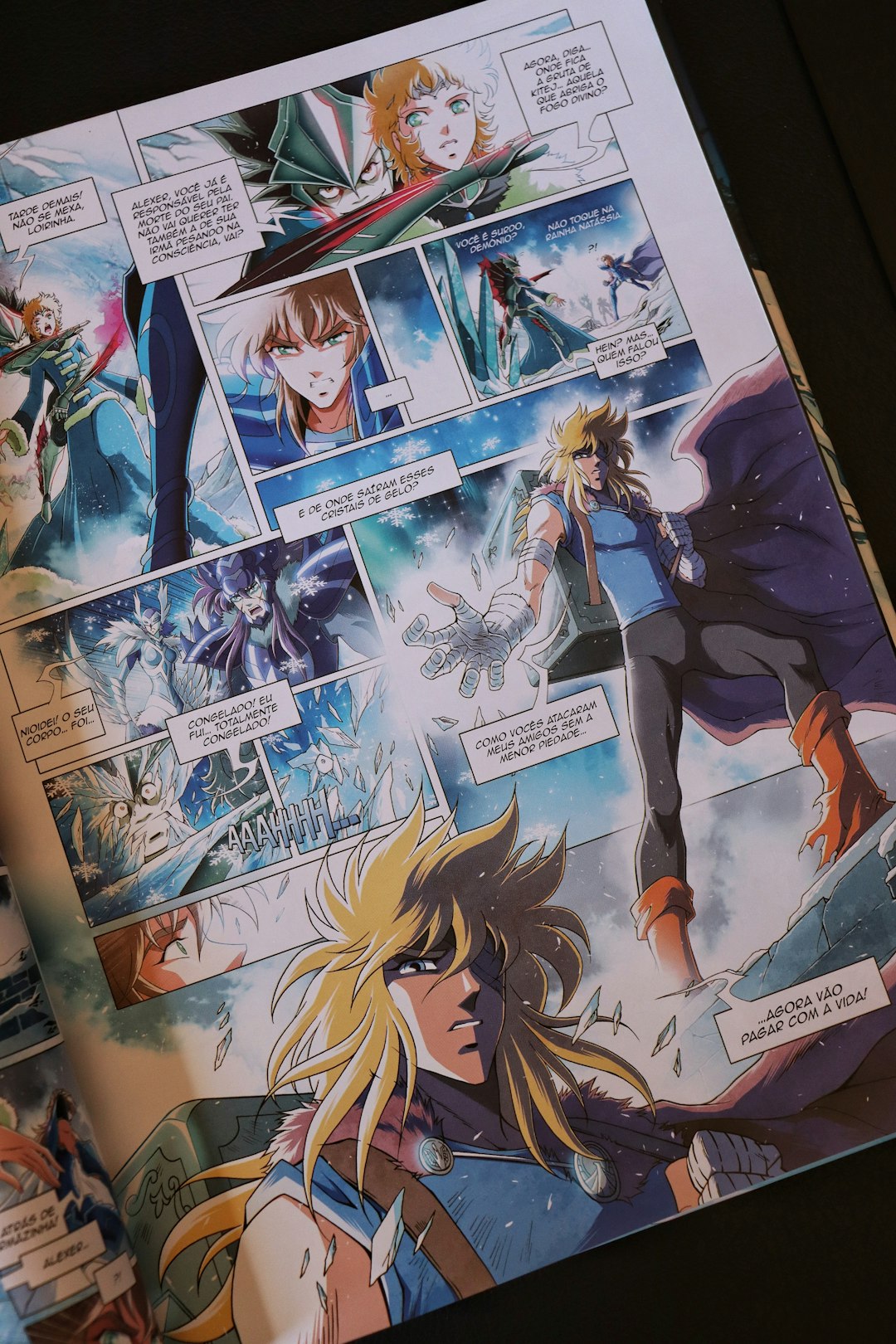
NovelAI remains popular among writers interested in serialized fiction, anime-inspired storytelling, roleplay, visual novel concepts, and highly stylized genre prose. Its appeal comes from its focus on narrative continuation and user-controlled storytelling.
For writers who enjoy interactive fiction, character-driven scenarios, and ongoing story worlds, NovelAI can be an engaging option. It is often used by creators who want a model that feels less like a formal assistant and more like a collaborative improviser. It can continue scenes, expand character interactions, and support imaginative worldbuilding.
Its strongest use case is not necessarily polished literary revision, but creative momentum. When a writer needs to keep a scene moving, test a character dynamic, or explore an alternate branch of a story, NovelAI can be highly effective.
Best AI Models by Writing Need
Different writing projects benefit from different tools. A single “best” model rarely exists for every author, because creative writing depends heavily on personal style, workflow, genre, and publishing goals.
- Best for general storytelling: OpenAI GPT models
- Best for emotional and literary writing: Anthropic Claude models
- Best for research-heavy fiction: Google Gemini models
- Best for privacy and customization: Meta Llama models
- Best for efficient drafting: Mistral models
- Best for novelists: Sudowrite
- Best for roleplay and serialized fiction: NovelAI
How Writers Should Use AI Without Losing Their Voice
The most successful writers treat AI as an assistant, not an author. They use it to generate possibilities, identify weaknesses, and accelerate repetitive tasks, while preserving human judgment over theme, meaning, structure, and final wording.
A practical workflow may include using AI to brainstorm premises, create character profiles, outline chapters, draft difficult scenes, and suggest revisions. However, the writer should still refine the text manually. The final story should reflect a human sense of taste, rhythm, and purpose.
To avoid generic results, writers should give models detailed creative direction. Instead of asking for “a fantasy opening,” a stronger prompt might specify the point of view, tone, setting, emotional conflict, sentence style, and what should remain mysterious. The more intentional the input, the more distinctive the output becomes.
Key Limitations of AI Storytelling Models
Even the best AI models have limitations. They may repeat common tropes, produce inconsistent character behavior, or resolve conflict too quickly. They can misunderstand subtle symbolism or flatten a uniquely human experience into familiar language. For long-form projects, they may lose track of continuity unless supplied with summaries and structured notes.
There are also ethical and legal considerations. Writers should understand the terms of the tools they use, especially when working with unpublished manuscripts, client projects, or commercial fiction. Human review remains essential for originality, accuracy, sensitivity, and copyright safety.
Final Verdict
The best AI models for creative writing and storytelling in 2026 are not identical in purpose. GPT models are the best all-around collaborators, Claude models excel at emotional and literary depth, Gemini models support research-rich and multimodal projects, Llama models offer privacy and customization, and Mistral models provide fast, efficient drafting. Specialized platforms such as Sudowrite and NovelAI remain valuable because they are designed with fiction workflows in mind.
For most writers, the ideal solution is not one model but a small toolkit. One model may help build the world, another may improve dialogue, and another may edit the final draft. The creative advantage belongs to writers who know how to direct AI clearly while keeping their own artistic instincts at the center of the process.
FAQ
What is the best AI model for creative writing in 2026?
The best all-around choice is typically an advanced GPT-style model because it handles brainstorming, drafting, editing, and rewriting well. However, Claude models may be better for literary and emotional writing, while Sudowrite may be better for dedicated fiction workflows.
Which AI model is best for writing novels?
Sudowrite, GPT models, and Claude models are among the strongest options for novel writing. Sudowrite is useful because its features are built specifically for fiction authors, while GPT and Claude models are strong for outlining, prose development, and revision.
Can AI write an entire book?
AI can generate a full-length manuscript, but the result usually needs significant human planning, editing, and rewriting. A stronger approach is for the writer to use AI as a collaborator while maintaining control over plot, voice, theme, and final prose.
Which AI is best for character development?
Claude models are especially strong for emotional nuance and character psychology. GPT models are also useful for generating character profiles, backstories, relationship conflicts, and dialogue variations.
Are open-source AI models good for storytelling?
Yes. Open models such as Llama-based and Mistral-based systems can be very useful for storytelling, especially when customized or run privately. They are popular among writers and developers who want more control over data, style, and deployment.
How can writers avoid generic AI-generated prose?
Writers can avoid generic output by giving detailed instructions about voice, tone, genre, pacing, point of view, and emotional intent. They should also revise the output manually and remove predictable phrasing, clichés, and unnecessary explanations.
Is AI suitable for screenwriting and game writing?
Yes. AI models can help create scene outlines, dialogue options, branching narratives, quest descriptions, character arcs, and worldbuilding documents. Human writers are still needed to maintain structure, originality, pacing, and dramatic purpose.
