For early-stage companies, decisions about where to invest limited time and capital can determine whether a product gains traction or fades quietly. User experience (UX) design often sits at the center of this tension: everyone agrees it matters, yet many startups struggle to build strong in-house capabilities early on. Outsourcing UX design can be a pragmatic solution—but only under the right conditions and with the right expectations.
TLDR: Outsourcing UX design makes sense when startups need speed, specialized expertise, or flexibility without the overhead of a full-time hire. It can accelerate product-market fit, reduce costly usability mistakes, and help teams focus on core competencies. However, it requires clear goals, strong communication, and thoughtful partner selection to avoid misalignment and wasted effort.
Why UX Design Is a Strategic Concern for Startups
UX design is not about aesthetics alone. At its core, it shapes how users understand, navigate, and ultimately trust a product. For startups, where first impressions and early adoption are critical, poor UX can sabotage even the most innovative technical ideas.
Well-executed UX design helps reduce user friction, clarifies value propositions, and supports measurable outcomes such as higher conversion rates, better retention, and lower support costs. Conversely, neglecting UX often leads to expensive rework later, when assumptions about user behavior prove incorrect.
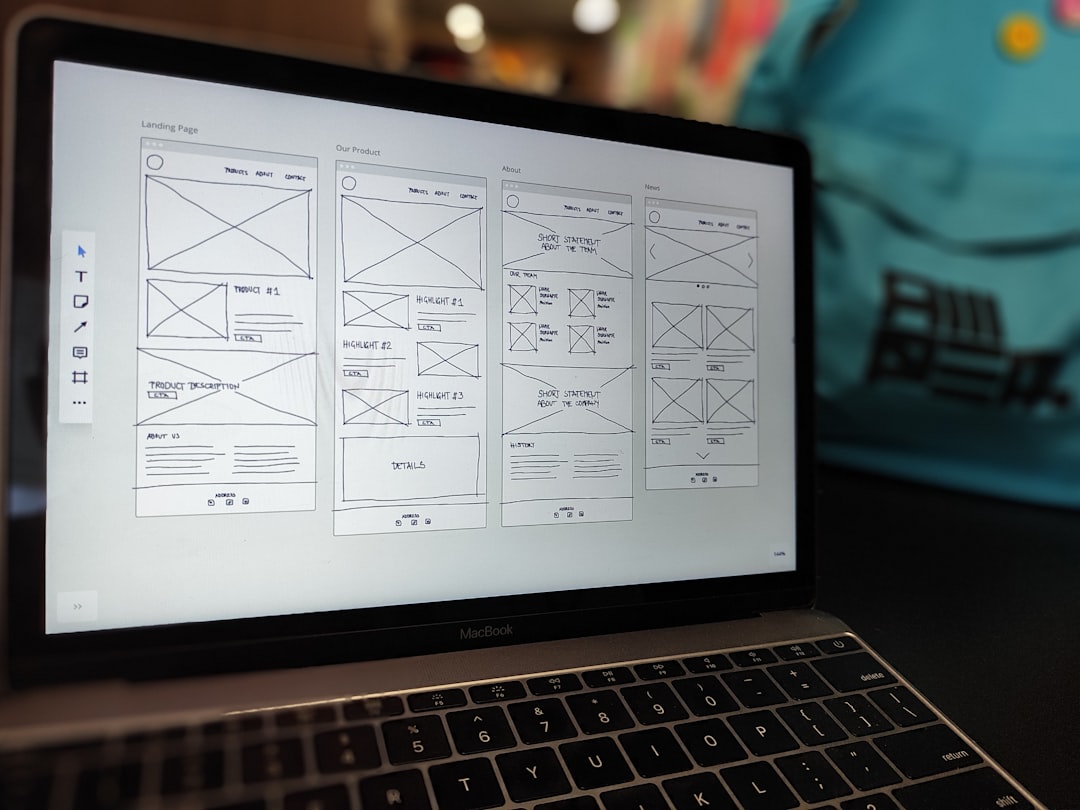
Despite its importance, UX design is also a discipline that requires experience, research methods, and continuous iteration—resources that many startups do not yet have internally.
Common Constraints Faced by Early-Stage Teams
Most startups operate under at least one of the following constraints:
- Limited headcount: Founders and early engineers already cover multiple roles.
- Budget sensitivity: Hiring senior UX talent full-time can be expensive.
- Time pressure: Speed to market often outweighs long-term organizational design.
- Uncertain direction: Product strategy may shift rapidly based on user feedback.
In this context, building an internal UX team too early can be impractical. Outsourcing becomes appealing not as a shortcut, but as a way to access expertise on demand.
When Outsourcing UX Design Makes Sense
Outsourcing UX design is most effective in specific scenarios rather than as a default choice. Below are situations where it tends to create real value.
1. You Need Specialized Expertise Quickly
Certain UX challenges—such as designing complex dashboards, onboarding flows, or accessibility-compliant interfaces—benefit from designers who have solved similar problems before. External UX partners often bring pattern knowledge and research frameworks that would take months or years to develop internally.
2. You Are in an Early Validation or MVP Phase
When a startup is testing assumptions and searching for product-market fit, flexibility matters more than permanence. Outsourced UX designers can support rapid prototyping, usability testing, and iteration without committing the company to a long-term hire before the product direction stabilizes.
3. UX Needs Outpace Internal Capacity
Even startups with an in-house designer may experience temporary spikes in UX workload, such as during a major feature launch or redesign. In these cases, outsourcing acts as a pressure valve, preventing burnout and delivery delays.
Key Benefits of Outsourcing UX Design
When done well, outsourcing UX design offers several tangible advantages.
- Cost efficiency: You pay for outputs and expertise rather than long-term overhead.
- Speed and scalability: External teams can often ramp up faster than hiring cycles allow.
- Objective perspective: Outside designers are less influenced by internal assumptions.
- Process maturity: Established UX partners bring tested workflows for research, design, and validation.
These benefits are particularly valuable when a startup needs to move decisively while still maintaining professional standards.
Risks and How to Mitigate Them
Outsourcing UX design is not without downsides. Treating it as a transactional service rather than a collaborative effort can lead to disappointing results.
Common risks include:
- Misalignment with product vision due to insufficient context.
- Communication gaps caused by time zones or unclear feedback loops.
- Over-polished designs that look good but lack technical or business feasibility.
These risks can be mitigated by involving outsourced designers in product discussions, sharing real user data, and assigning an internal owner responsible for alignment and decision-making.
How to Choose the Right UX Partner
Selecting a UX partner should be approached with the same rigor as hiring a senior team member. A credible provider will demonstrate not only design skill, but also strategic thinking.
Look for partners who:
- Can explain the rationale behind design decisions.
- Have experience with startups at a similar stage.
- Emphasize user research and validation, not just visuals.
- Are comfortable collaborating with product managers and engineers.
Request case studies, speak with past clients, and assess how well the partner understands your business context before committing.
When Outsourcing UX Design Does Not Make Sense
There are situations where outsourcing may be the wrong choice. For products with highly specialized domain knowledge—such as regulated medical or financial systems—close, continuous integration with internal teams may be essential.
Similarly, once a startup reaches scale and UX becomes a core competitive differentiator, investing in an in-house design function usually yields better long-term results. At that stage, outsourced support may still play a role, but no longer as the primary driver.
Budgeting and Measuring ROI
From a financial perspective, outsourcing UX design should be treated as an investment tied to clear outcomes. These outcomes might include improved activation rates, reduced churn, or faster feature adoption.
Establishing success metrics upfront helps ensure accountability and prevents scope creep. Regular reviews of both qualitative outcomes (user feedback) and quantitative indicators (conversion or task completion rates) allow startups to assess whether the engagement delivers measurable value.
Conclusion
Outsourcing UX design can be a strategic enabler for startups navigating uncertainty, limited resources, and ambitious timelines. When aligned with clear objectives and supported by strong collaboration, it offers access to expertise that might otherwise be out of reach.
Ultimately, the decision is less about whether UX should be outsourced and more about timing, intent, and execution. Startups that approach outsourcing thoughtfully—viewing external designers as partners rather than vendors—are far more likely to translate good design into sustainable business outcomes.
