
Modern applications are no longer monolithic systems running on a single server. They are built as distributed architectures composed of microservices, containers, serverless functions, APIs, and third-party integrations. While this architectural shift brings flexibility and scalability, it also introduces a significant challenge: understanding what actually happens when a user sends a request. Distributed tracing software has emerged as a critical solution, helping teams visualize and analyze the complete lifecycle of every request as it moves through complex systems.
TLDR: Distributed tracing software tracks requests as they travel across multiple services in a distributed system. It gives engineering teams detailed visibility into performance bottlenecks, errors, and dependencies. By mapping each step of a request’s journey, tracing tools make it easier to troubleshoot issues, optimize performance, and maintain reliability in modern applications. Without tracing, debugging distributed systems can feel like searching for a needle in a haystack.
What Is Distributed Tracing?
Distributed tracing is a technique used to monitor and observe requests as they propagate through various services within a distributed system. Each request is assigned a unique identifier, often called a trace ID, which allows engineers to follow its path from entry point to final response.
In a simple application, a request might:
- Hit a load balancer
- Route to a web server
- Trigger an authentication service
- Query a database
- Call an external API
- Return a processed response
In a distributed architecture, each of these steps could occur on different machines, in different containers, or even in different cloud regions. Distributed tracing tools stitch together all these interactions into a coherent timeline of events called a trace.

Why Understanding Request Lifecycles Matters
At first glance, logging and monitoring may seem sufficient for diagnosing issues. However, logs are often siloed within individual services, and metrics provide aggregated insights rather than granular detail about specific requests.
Distributed tracing fills the visibility gap by answering critical questions such as:
- Where did the latency occur?
- Which service failed or timed out?
- How do services depend on each other?
- Why does the issue affect only certain users?
Without tracing, debugging can be reactive and time-consuming. Engineers must manually correlate logs across systems, match timestamps, and infer relationships. Distributed tracing automates this correlation and presents it in an intuitive format.
Core Components of Distributed Tracing
To understand how distributed tracing software works, it helps to break it down into its primary components.
1. Traces and Spans
A trace represents the entire lifecycle of a request from start to finish. Within that trace are smaller units called spans, which represent individual operations or steps.
For example:
- Trace: User submits checkout request
- Span 1: Authentication validation
- Span 2: Inventory check
- Span 3: Payment processing
- Span 4: Email notification
Each span includes metadata such as start time, duration, service name, and status. When visualized, these spans form a waterfall timeline, making latency spikes immediately visible.
2. Context Propagation
As a request moves between services, the trace ID must be passed along. This process is known as context propagation. Distributed tracing standards ensure that downstream services continue attaching data to the same trace, preserving observability even across boundaries.
3. Instrumentation
Instrumentation is the process of integrating tracing code into applications. It can be:
- Manual – Developers add tracing logic directly into code.
- Automatic – Frameworks and agents capture traces with minimal configuration.
Modern tracing systems increasingly rely on open standards such as OpenTelemetry, allowing consistent data collection across diverse technology stacks.
How Distributed Tracing Improves Troubleshooting
When something breaks in a distributed system, pinpointing the root cause quickly is essential. Distributed tracing significantly reduces Mean Time to Resolution (MTTR) by offering precise insights.
Consider an e-commerce application experiencing slow checkout times. With tracing, engineers can:
- Identify that checkout requests average 3 seconds.
- Discover that 2.4 seconds are spent in a third-party payment API call.
- Confirm that inventory and authentication services respond normally.
- Determine that latency increases during peak hours.
Instead of investigating every component, teams focus immediately on the problematic service. This targeted approach saves hours or even days of guesswork.
Performance Optimization Through Tracing
Tracing isn’t just for fixing problems—it’s also a powerful optimization tool. Performance engineering relies on understanding system behavior under normal and peak loads.
Distributed tracing enables teams to:
- Detect slow database queries
- Identify redundant service calls
- Uncover inefficient retry mechanisms
- Spot network bottlenecks between regions
- Analyze service dependencies for architectural improvements
Because each trace captures real-world request flows, it reflects actual user experiences. This makes optimization efforts more accurate and impactful compared to synthetic benchmarks alone.
Improving Reliability and Incident Response
Reliability engineering revolves around maintaining uptime and minimizing disruptions. Distributed tracing enhances reliability practices in multiple ways:
Faster Incident Detection
Tracing tools often integrate with alerting systems. When latency exceeds thresholds or error spans increase, engineers are notified immediately.
Dependency Visualization
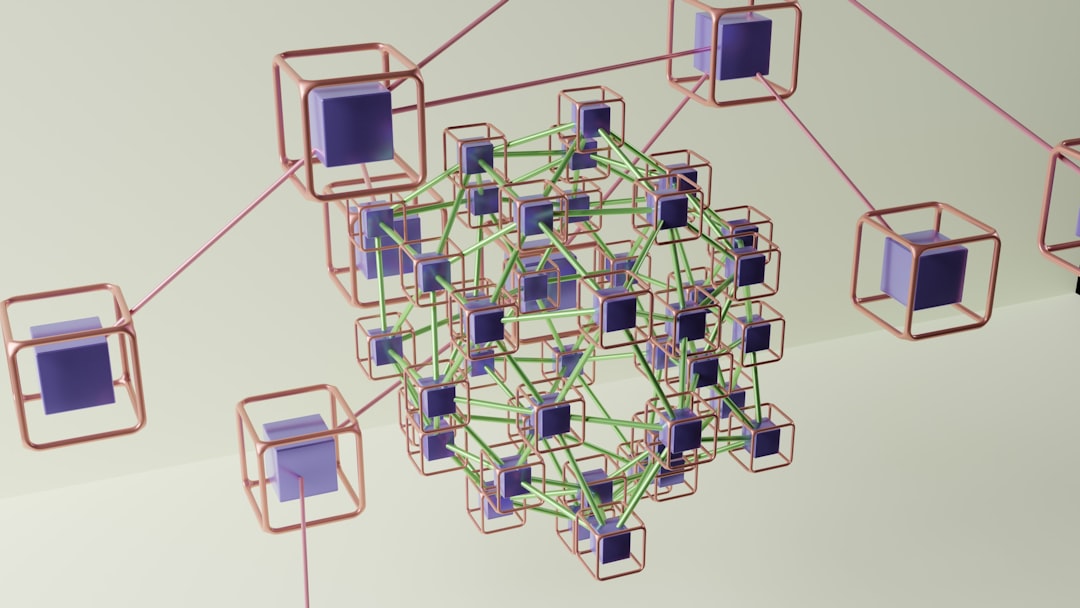
Modern applications contain numerous internal and external dependencies. Tracing software maps these relationships visually, helping teams assess blast radius during outages.
Root Cause Analysis
Instead of reviewing countless logs, teams can examine a failing trace and see precisely where errors occurred and why.
Distributed Tracing in Microservices and Cloud Native Environments
Microservices magnify observability challenges because requests frequently hop between loosely coupled services. Container orchestration platforms and serverless environments add another layer of complexity.
Distributed tracing software is particularly valuable in these environments because:
- Services scale dynamically.
- Containers may be short-lived.
- Requests may route unpredictably.
- Infrastructure is abstracted away from developers.
Traditional monitoring methods assume stable infrastructure. In contrast, distributed tracing focuses on the logical path of the request, making it infrastructure-agnostic and future-proof.
Business Impact of Better Request Visibility
The value of distributed tracing extends beyond engineering teams. Clear visibility into request lifecycles supports business objectives such as:
- Enhanced user experience through faster load times
- Improved conversion rates by preventing errors in checkout flows
- Lower operational costs through efficient resource utilization
- Stronger customer trust via increased uptime
When teams understand how every request behaves, they can align technical improvements with measurable business outcomes.
Best Practices for Implementing Distributed Tracing
To gain maximum benefit from tracing software, organizations should follow best practices:
- Adopt open standards to avoid vendor lock-in.
- Instrument early in the development lifecycle.
- Correlate tracing with logs and metrics for full observability.
- Ensure sampling strategies are optimized to balance visibility with cost.
- Train teams to interpret trace data effectively.
Observability is not just about tools—it’s about culture. Teams that treat tracing as an integral part of development are more resilient and proactive.
Challenges and Considerations
Although distributed tracing offers powerful insights, it also comes with considerations.
Data Volume: Capturing every request in high-traffic systems can generate enormous amounts of data. Efficient sampling strategies are essential.
Complex Configuration: Proper instrumentation across varied stacks may require initial effort and coordination.
Security and Privacy: Trace data may contain sensitive information, necessitating careful handling and sanitization.
Addressing these challenges ensures that tracing remains both cost-effective and secure.
The Future of Distributed Tracing
As applications continue to evolve, distributed tracing is becoming a cornerstone of full-stack observability. Emerging trends include:
- AI-driven anomaly detection within trace data
- Deeper integration with continuous integration and deployment pipelines
- Unified observability platforms combining traces, logs, and metrics
- Real user monitoring correlations that link browser sessions directly to backend traces
The future points toward even greater automation and actionable intelligence, enabling teams to move from reactive troubleshooting to predictive optimization.
Conclusion
Distributed tracing software transforms the way organizations understand and manage modern applications. By tracking every request across services, it provides a detailed map of system behavior that would otherwise remain hidden. Whether diagnosing latency, preventing outages, or optimizing performance, tracing tools give teams the clarity they need to operate complex distributed systems with confidence.
In a digital landscape defined by interconnected services and cloud-native architectures, understanding the lifecycle of a single request can make the difference between seamless user experiences and costly downtime. Distributed tracing ensures that no request journey is a mystery—and that every step is visible, measurable, and improvable.
